
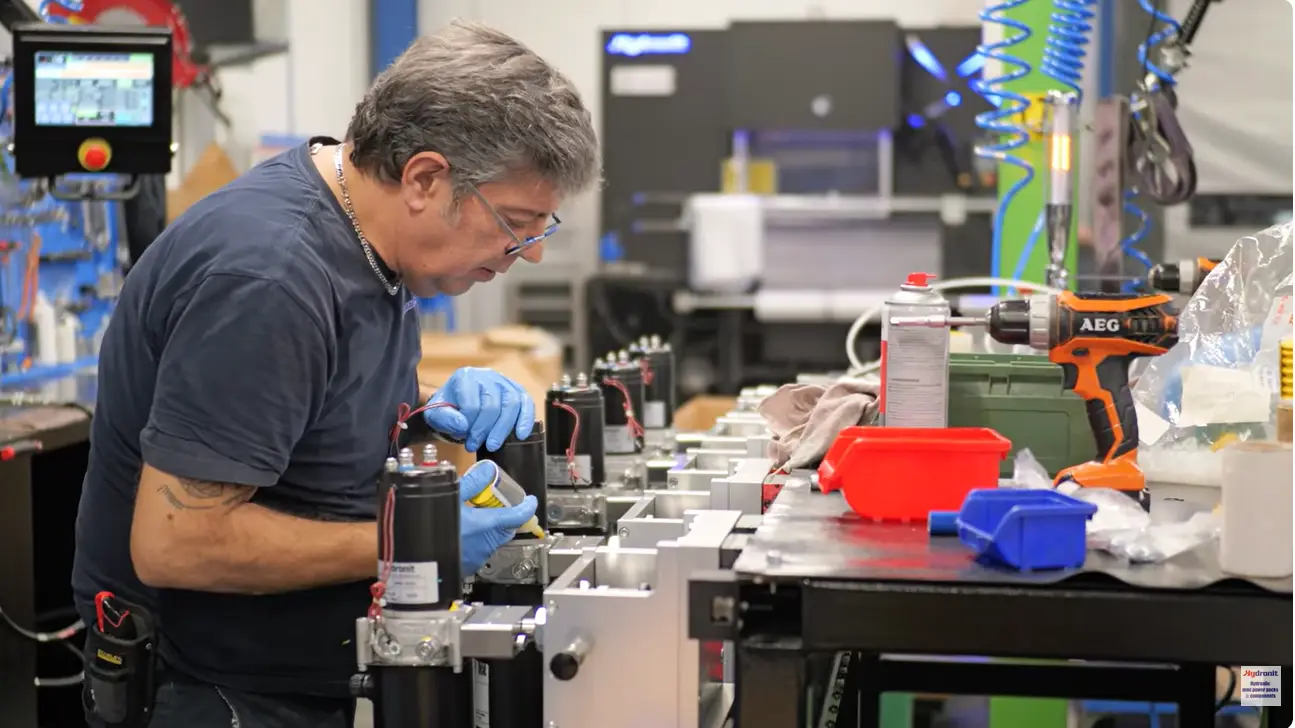
Hydraulic power units are crucial devices for the operation of numerous systems and machinery where precise management of mechanical force and movements is required. Using the power of pressurized oil, these units enable the operation of actuators such as cylinders and motors, transferring energy very efficiently. The hydraulic system is particularly advantageous for applications requiring high power in compact spaces, as oil allows for the generation of significant forces without compromising the compactness of the system.
This technology is essential in sectors such as heavy industry, where it is used in machinery for metalworking, hydraulic presses, and other equipment requiring high forces. In the maritime field, for example, hydraulic power units control ship propellers, cranes, and anchoring systems. In agriculture, on the other hand, they power tractors and equipment for sowing and harvesting. Also in the automotive sector, especially in heavy vehicles and construction machinery, hydraulic systems are essential for the movement of mechanical arms and other equipment. Their versatility and ability to operate under harsh conditions make them indispensable in a wide range of industrial and non-industrial applications.
Hydraulic power units: what are they?
A hydraulic power unit is a system that generates and manages oil pressure within a hydraulic circuit. Its purpose is to power and control devices that require significant force for their operation. Let’s look at the components of the hydraulic power unit.
Hydraulic Pump
The hydraulic pump is the beating heart of the hydraulic power unit, as it performs the fundamental task of drawing oil from the reservoir and pressurizing it. This oil compression process enables the system to provide the necessary power to feed various actuators, such as cylinders and motors. Depending on the type of application, the pump can be designed to generate different oil pressures and flow rates, adapting to the specific requirements of the hydraulic circuit. Its efficiency is crucial for the proper functioning of the entire system, as a malfunctioning pump would compromise system performance.
Tank
The reservoir is a fundamental component of the hydraulic power unit, as it contains the hydraulic oil, which is essential for the operation of the entire system. In addition to storing oil, the reservoir also plays a crucial role in maintaining optimal conditions for the circuit. Inside it, the oil is cooled through heat exchangers, preventing overheating that could compromise its viscosity and efficiency. Additionally, the reservoir is equipped with filters that remove impurities and contaminants, keeping the oil clean and preventing damage to pumps and other system components.
Valves
Hydraulic valves are essential devices, as they regulate the flow of oil within the system, directing it to various components such as cylinders and motors. Thanks to the valves, it is possible to precisely control the direction, speed, and pressure of the oil, ensuring that each actuator receives the necessary amount of fluid to perform its task optimally. There are different types of valves, such as flow, pressure, and directional valves, which allow the system’s behavior to be managed according to operational needs, ensuring efficiency and safety.
Actuators
Hydraulic cylinders and motors are the main actuators that, using the energy provided by pressurized oil, perform the desired mechanical work within the hydraulic system. In hydraulic cylinders, oil enters a closed chamber, creating pressure that pushes a piston to generate linear movement, such as opening a press or lifting a load. Hydraulic motors, on the other hand, convert the oil’s energy into rotary motion, used to operate complex machinery, such as cranes or agricultural machines. Thanks to their precision and strength, these actuators are essential for operations requiring high performance.
Filters
Hydraulic filters are indispensable components in hydraulic power units, as they protect the entire system from contamination and impurities present in the oil. These foreign particles, if not removed, can damage pumps, valves, cylinders, and other actuators, compromising the system’s efficiency and reducing its lifespan. Filters capture dust, rust, metal particles, and other contaminants that could affect working surfaces and increase component wear. Regular maintenance of the filters is essential to keep the hydraulic circuit clean and ensure optimal and prolonged performance over time.
Gauges and sensors
Gauges and sensors are key measurement and control instruments in hydraulic power units. Gauges are mechanical devices that provide an immediate visual indication of the fluid pressure in the circuit, allowing the operator to quickly check operating conditions and diagnose any anomalies. Pressure sensors, on the other hand, convert the pressure value into an electrical signal (analog or digital) that is transmitted to electronic control systems (PLCs, control units). This allows for continuous monitoring, data recording, implementation of automatic control logic, and plant protection through alarms and safety shutdowns. While gauges remain essential for quick visual checks and backup in case of electronic failures, sensors are indispensable in modern automated systems to ensure precision, traceability, and integration with the industry.
Operation of a hydraulic power unit
The operation is based on Pascal’s law, which states that in an incompressible fluid (such as oil), a pressure change is transmitted equally in all directions. This principle allows high forces to be generated through the fluid, which are then used to move heavy loads or operate actuators.
When the system is operating, the hydraulic pump draws oil from the reservoir and sends it, at high pressure, to the circuit. Valves regulate oil flow, directing it to hydraulic cylinders or motors, which perform the required work. Depending on requirements, valves can be manual or automatic, allowing precise control of movements.
For example, in a system controlling a mechanical arm, oil pushes the piston of a cylinder, which in turn moves the arm. The amount and pressure of oil regulate the speed and force of movement. If the system is well designed, it is also possible to achieve very rapid and precise movements, necessary in many industrial processes.
Applications for hydraulic power unit
Hydraulic power units find application in a wide range of industrial and other applications. Some of the main areas are:
- Heavy industry and industrial machinery: they are used in machinery such as presses, industrial furnaces, and metalworking machines, where great force is required to operate.
- Lifting systems: In elevators, cranes, and aerial platforms, where it is necessary to lift heavy loads precisely and in a controlled manner.
- Maritime sector: Ships use hydraulic systems to control propellers, doors, and other onboard equipment.
- Agriculture: Tractors and other agricultural vehicles make extensive use of hydraulic power units to operate equipment such as plows, seeders, and harvesting machines.
- Automotive sector: Heavy vehicles and construction machinery (such as excavators, bulldozers) use hydraulic systems to control the movement of arms and other equipment.
- Aerospace: they are also used for controlling ailerons, flaps, and other control surfaces on aircraft, as well as for the movement of wheels and landing systems.
Advantages of hydraulic power unit
High force in compact space: Hydraulic power units are capable of generating very high forces while occupying relatively small spaces compared to other types of actuators.
Precise control: Pressure and flow regulation allows precise control of movements, even for complex and delicate applications
Reliability: These systems are known for their robustness and ability to operate in difficult environments, even at high temperatures or under harsh working conditions
Versatility: Applications are extremely varied, thanks to their ability to adapt to multiple force and movement needs.
Ease of maintenance: Although they require regular maintenance to maintain efficiency, they are generally easy to maintain due to the simplicity of their main components.
From present to future: the value of hydraulics
Hydraulic power units are one of the most versatile and efficient technologies for controlling movement and force in industrial settings and many other applications. Their ability to generate high power in relatively small spaces makes them indispensable for a wide range of sectors. From simple automation to managing complex systems, hydraulic power units remain a fundamental pillar for technological progress in applications requiring force, precision, and reliability.
Do you want to start your hydraulic project? Contact our experts.
Discover
Hydronit
Hydronit specializes in the production of modular hydraulic power packs. Innovation, quality and sustainability drive our solutions exported to over 50 countries.


